
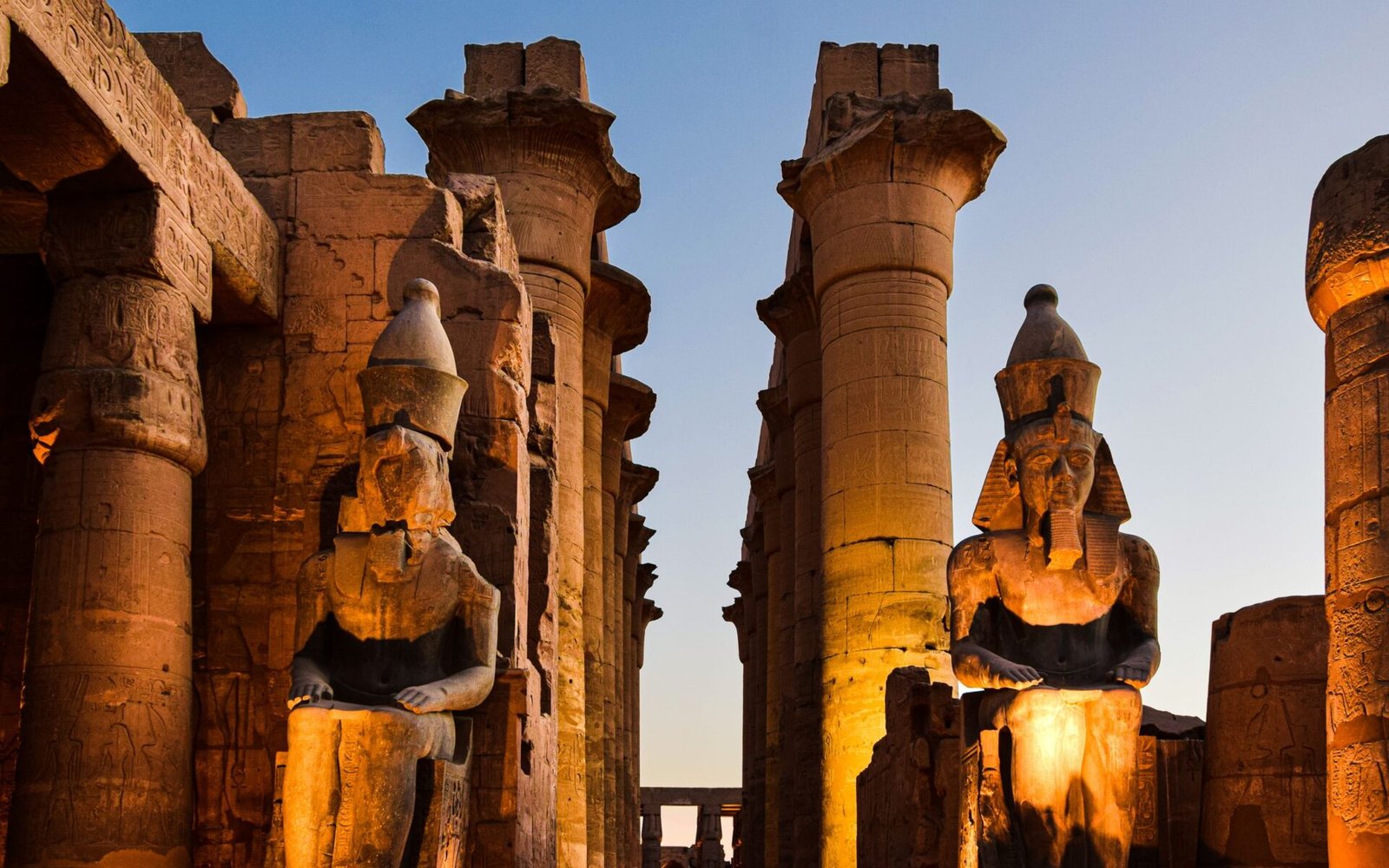
Luxor Temple
Luxor Temple sits in the heart of the modern city and is central to understanding royal renewal, procession and the sacred geography linking it with Karnak.
Read the monument as part of a larger Egyptian story
Unlike a temple isolated in a desert archaeological park, Luxor Temple remains embedded in the modern city. Its architecture records contributions from several rulers and later periods, while its relationship with the Avenue of Sphinxes is essential to understanding the Opet Festival.
Historical context
Major construction is associated with Amenhotep III and Ramesses II, with earlier and later additions. The temple continued to be adapted in Roman, Christian and Islamic periods, making it one of the clearest places in Luxor to see historical layering.
Details that help the site make sense
These are interpretive features to notice, not a promise of a fixed walking order or permanent access to every area.
Amenhotep III colonnade
The processional architecture creates a powerful transition into the temple.
Ramesses II court and pylon
Monumental royal imagery announces kingship at the northern entrance.
Later religious layers
Roman, Christian and Islamic traces show that the sacred urban site continued to change.
The detail that changes how you see the place
Luxor Temple is one of the best places to explain continuity. Ancient ritual, Roman transformation, Christian reuse, an active mosque and the modern city occupy the same physical space.
What an expert eye notices
Column proportions
The colonnade changes the rhythm of movement dramatically.
Different periods in one view
Look for pharaonic relief, Roman intervention and later religious architecture together.
Evening light
Low light can make relief and architectural depth easier to read, though timing is operational.
Questions travellers ask about Luxor Temple
Historical context stays stable; operating details are confirmed for your date because access and visitor rules can change.
What was Luxor Temple used for?
It was closely connected with royal renewal and the Opet Festival, among other ritual functions.
Who built it?
Amenhotep III and Ramesses II are major builders, but the site contains additions from multiple periods.
Why is there a mosque inside the temple area?
The site remained part of a living city and was reused over centuries; the Mosque of Abu al-Haggag is part of that later history.
Tours and journeys that include Luxor Temple
The same canonical site guide can belong to several experiences. Each tour explains why the place matters to that particular story.
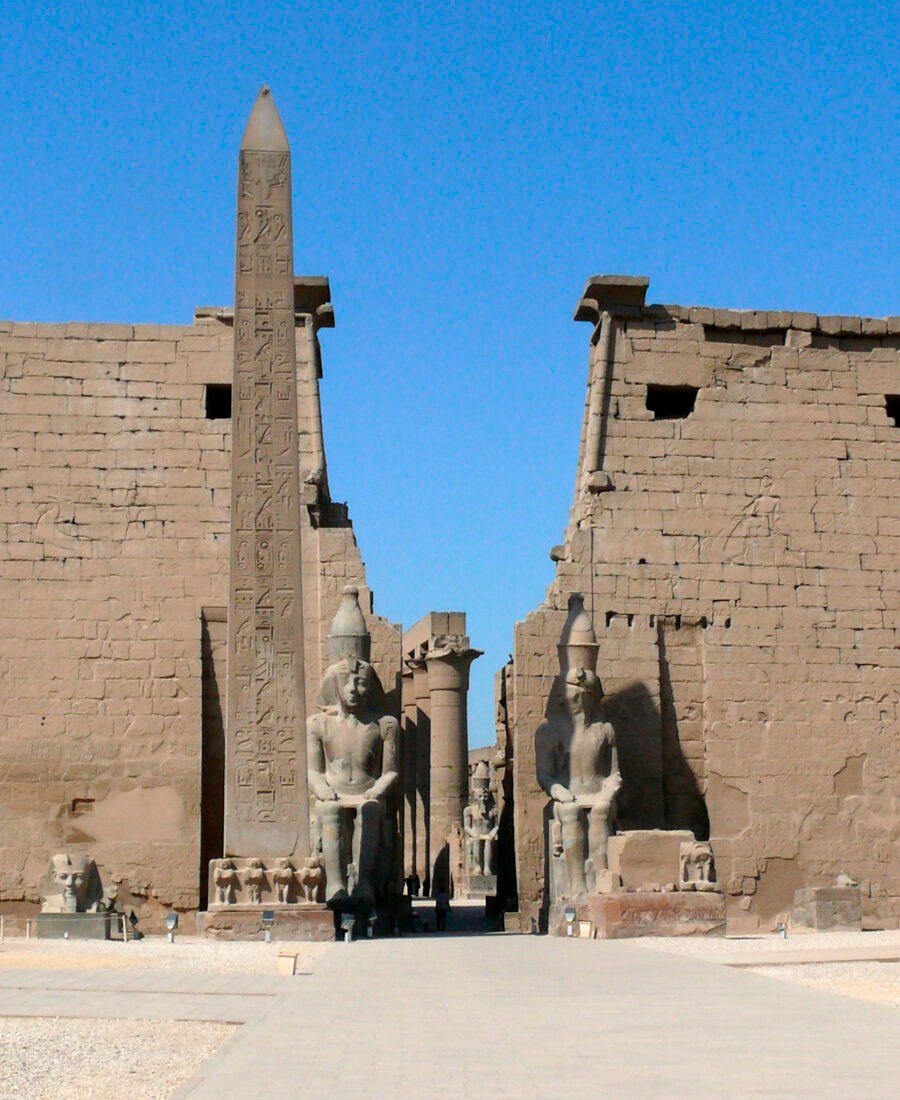
The Sacred Heart of Thebes
Explore the monumental and ritual heart of ancient Thebes on the East Bank.
Request current rateExplore →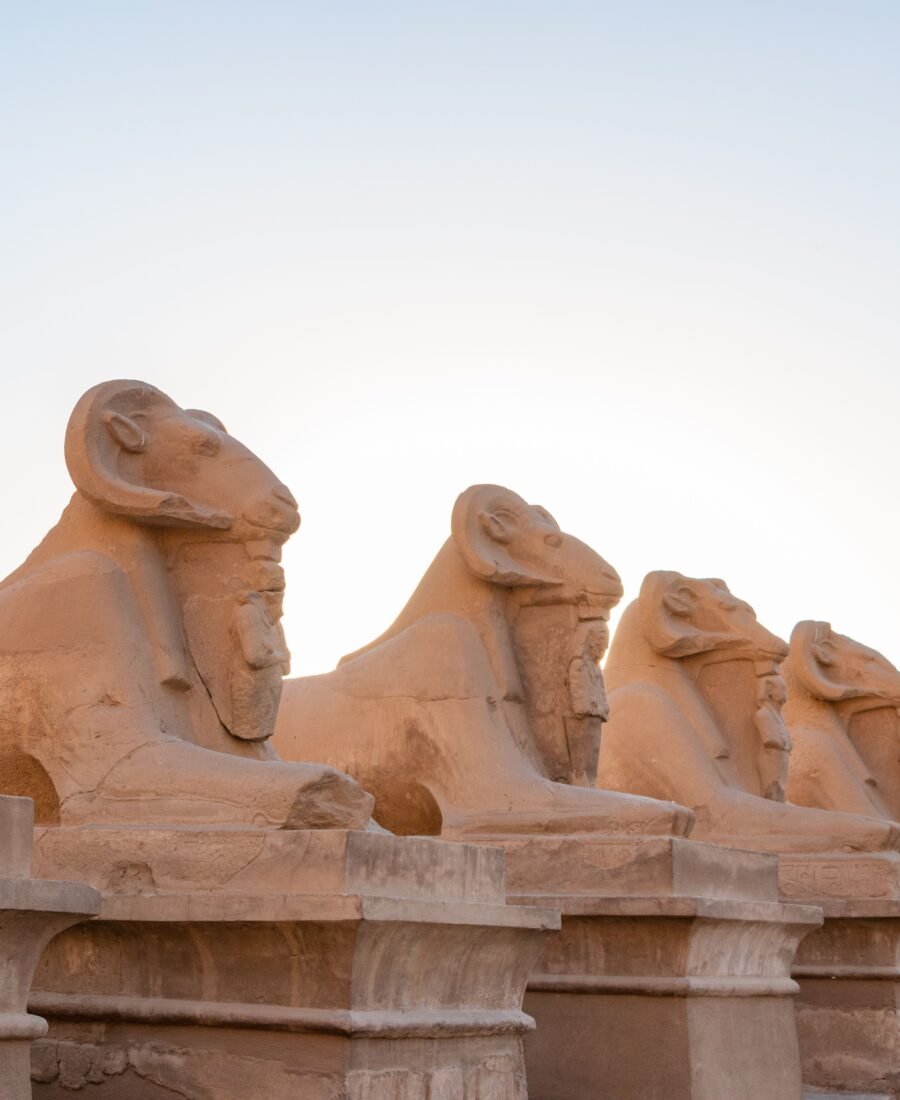
Thebes Essential
Walk through the ceremonial heart of ancient Egypt.
Request current rateExplore →This field guide is maintained against authoritative heritage and institutional references where available. Current operations are verified separately.
See Luxor Temple with context, not as another checklist stop
Tell us the places and historical themes that interest you. We will build the touring day around a coherent story and the conditions for your travel date.
Start Planning