
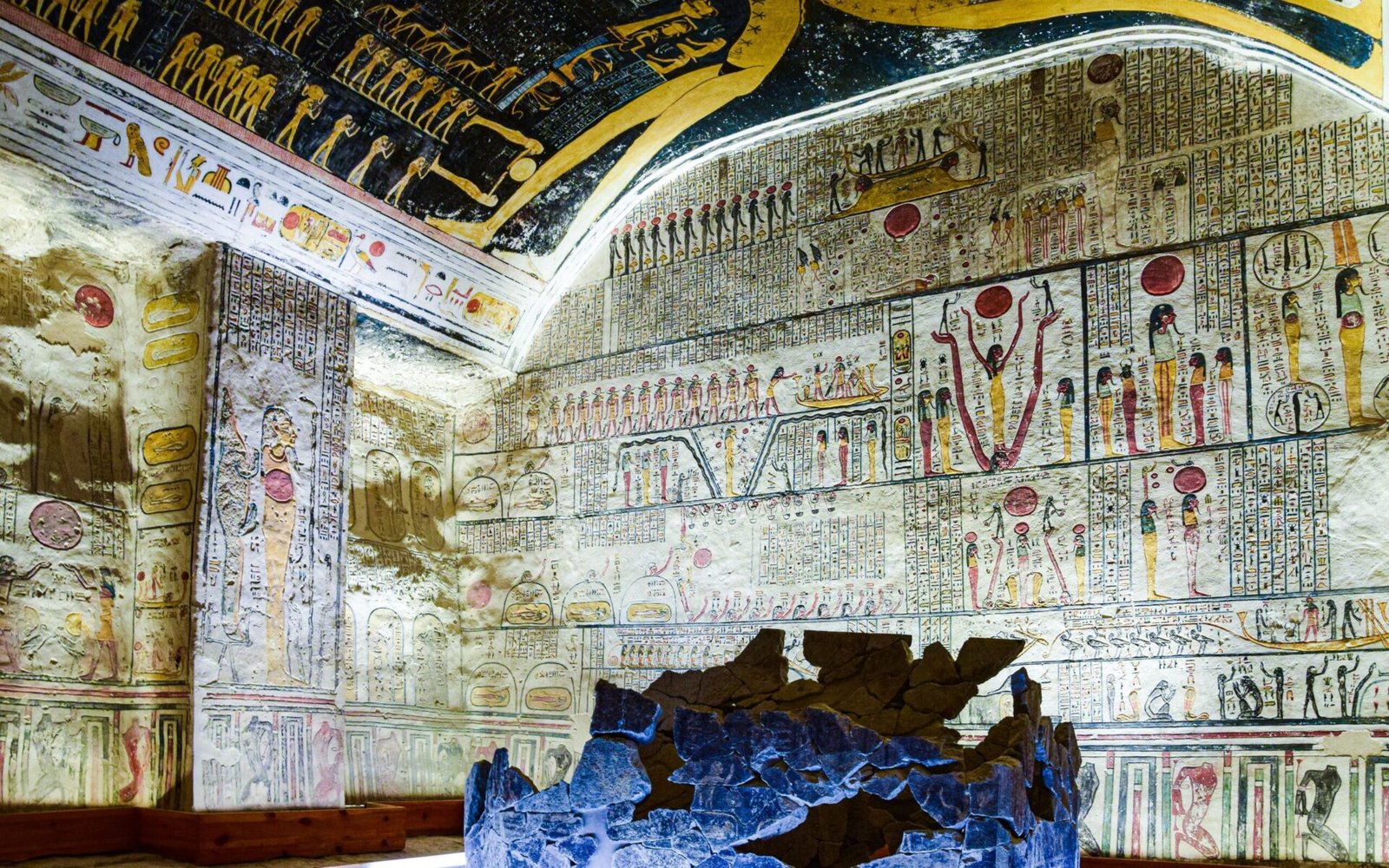
Tuna el-Gebel
Tuna el-Gebel is a complex necropolis associated with Hermopolis, combining elite tombs, sacred-animal burials and evidence for late Egyptian and Greco-Roman religious life.
Read the monument as part of a larger Egyptian story
The site broadens the idea of an Egyptian necropolis. Human burials sit beside extensive animal-cult evidence, and the famous tomb of Petosiris combines Egyptian and Greek visual languages in a period of intense cultural interaction.
Historical context
Tuna el-Gebel served as a necropolis for nearby Hermopolis and became particularly important in the Late, Ptolemaic and Roman periods. Catacombs held large numbers of ibis and baboon burials associated with Thoth.
Details that help the site make sense
These are interpretive features to notice, not a promise of a fixed walking order or permanent access to every area.
Tomb of Petosiris
Architecture and decoration combine Egyptian religious forms with Hellenistic artistic features.
Animal catacombs
Ibis and baboon burials reveal organised sacred-animal cult practice on a major scale.
Boundary landscape
The desert necropolis relates directly to Hermopolis and regional cult of Thoth.
The detail that changes how you see the place
Tuna el-Gebel is ideal for explaining that “Greek” and “Egyptian” are not always separate boxes in Ptolemaic Egypt. Patrons could combine artistic languages while maintaining Egyptian funerary ideas.
What an expert eye notices
Costume and body style
At Petosiris, visual conventions shift while ritual subject matter remains recognisably Egyptian.
Mass burial organisation
Animal cults were institutional systems requiring breeding, mummification and deposition.
Desert placement
The necropolis occupies a boundary landscape beyond the cultivated zone.
Questions travellers ask about Tuna el-Gebel
Historical context stays stable; operating details are confirmed for your date because access and visitor rules can change.
What is Tuna el-Gebel known for?
The tomb of Petosiris and extensive sacred-animal catacombs are among its best-known features.
Why were animals buried there?
Ibises and baboons were associated with Thoth and were mummified and deposited as part of organised cult practice.
Is it near Amarna?
Both are in Middle Egypt but are distinct sites and require route planning.
Tours and journeys that include Tuna el-Gebel
The same canonical site guide can belong to several experiences. Each tour explains why the place matters to that particular story.
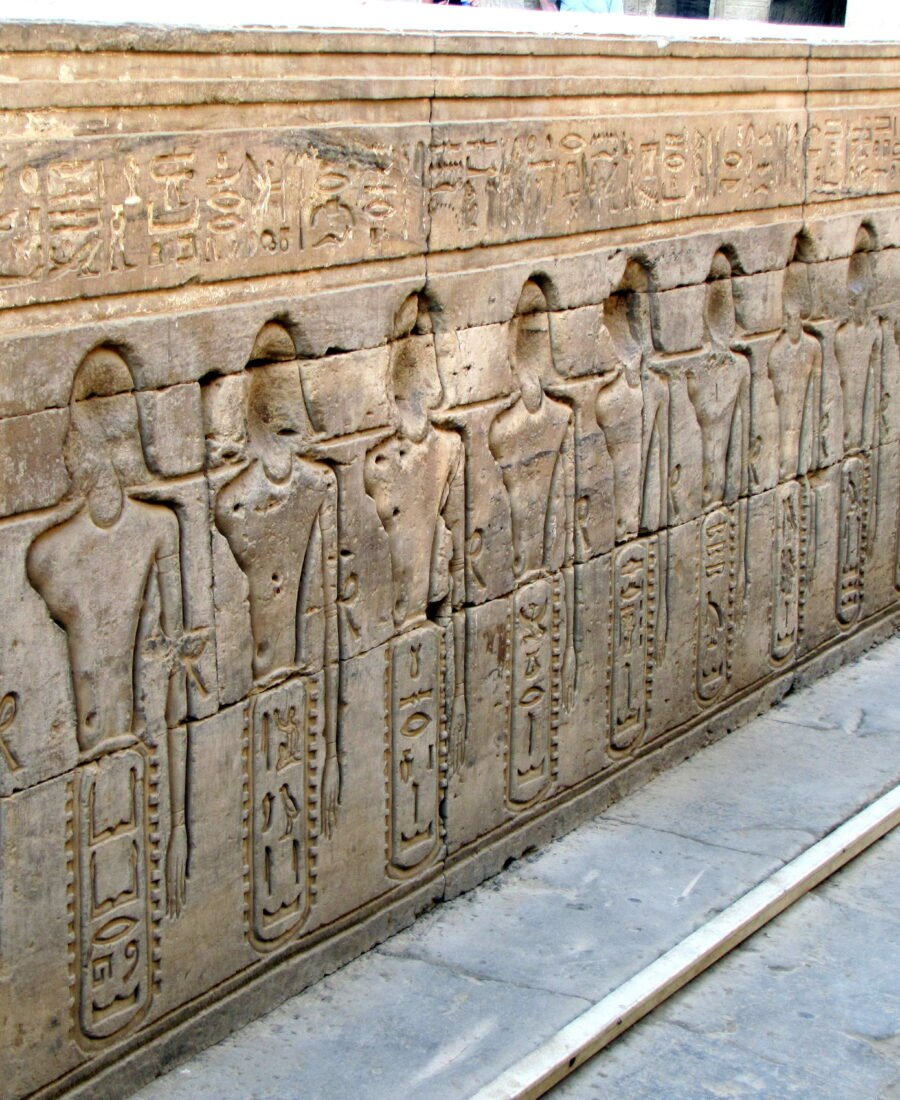
The Sacred Middle Egypt Journey
Travel through one of Egypt’s most overlooked historical landscapes.
Request current rateExplore →This field guide is maintained against authoritative heritage and institutional references where available. Current operations are verified separately.
See Tuna el-Gebel with context, not as another checklist stop
Tell us the places and historical themes that interest you. We will build the touring day around a coherent story and the conditions for your travel date.
Start Planning