
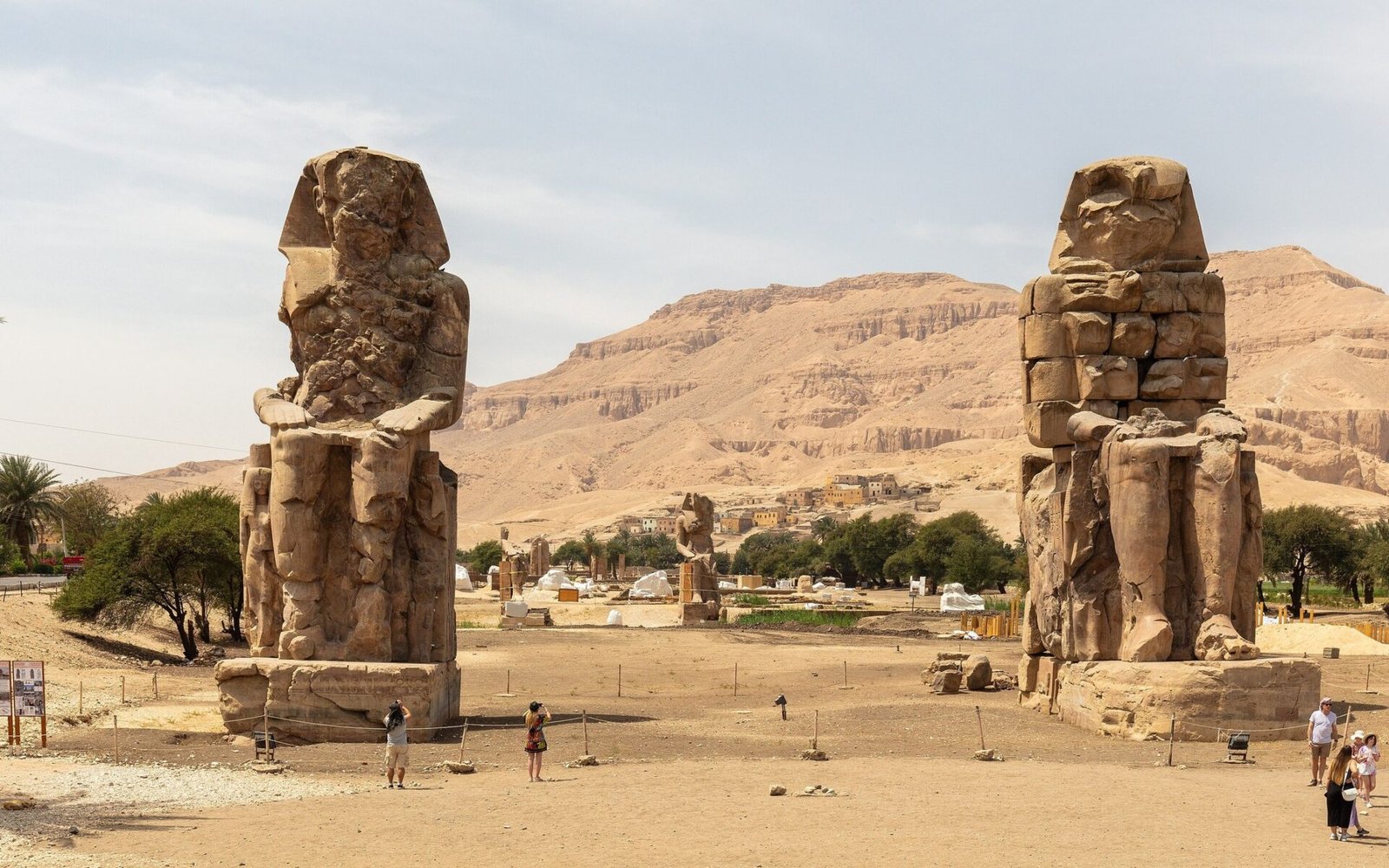
Colossi of Memnon
The Colossi of Memnon are the surviving monumental guardians of Amenhotep III’s vast memorial temple, once one of the largest complexes on the Theban West Bank.
Read the monument as part of a larger Egyptian story
The two seated statues are often treated as a quick photo stop, but their real value is reconstructive: they help visitors imagine a temple landscape that has largely disappeared. Archaeology around them continues to reveal the scale and richness of Amenhotep III’s building programme.
Historical context
The statues represent Amenhotep III and stood at the entrance to his Eighteenth Dynasty memorial temple. In antiquity one statue became famous for a sound reported at dawn, leading Greek and Roman visitors to associate it with the hero Memnon.
Details that help the site make sense
These are interpretive features to notice, not a promise of a fixed walking order or permanent access to every area.
Lost temple scale
Use the statues as anchors for imagining the much larger complex behind them.
Royal representation
The seated king is monumental, but smaller figures and throne details add dynastic meaning.
Later reception
Greek and Roman fascination became part of the monument’s post-pharaonic history.
The detail that changes how you see the place
The best interpretation is archaeological reconstruction: what looks like “two statues in a field” is actually the surviving threshold of a major royal temple landscape.
What an expert eye notices
Throne sides
Look for Nile-related and symbolic imagery.
Smaller figures
Royal family figures help humanise the colossal scale.
Surrounding excavation
The wider site makes the vanished temple easier to visualise.
Questions travellers ask about Colossi of Memnon
Historical context stays stable; operating details are confirmed for your date because access and visitor rules can change.
Why are they called the Colossi of Memnon?
Greek and Roman visitors associated the northern statue’s reported dawn sound with the mythic Memnon.
What happened to the temple?
Flooding, stone reuse, earthquakes and time left the complex far less intact than the statues.
How long is a visit?
It is usually a short stop, but context makes it more meaningful than a simple photograph.
Tours and journeys that include Colossi of Memnon
The same canonical site guide can belong to several experiences. Each tour explains why the place matters to that particular story.
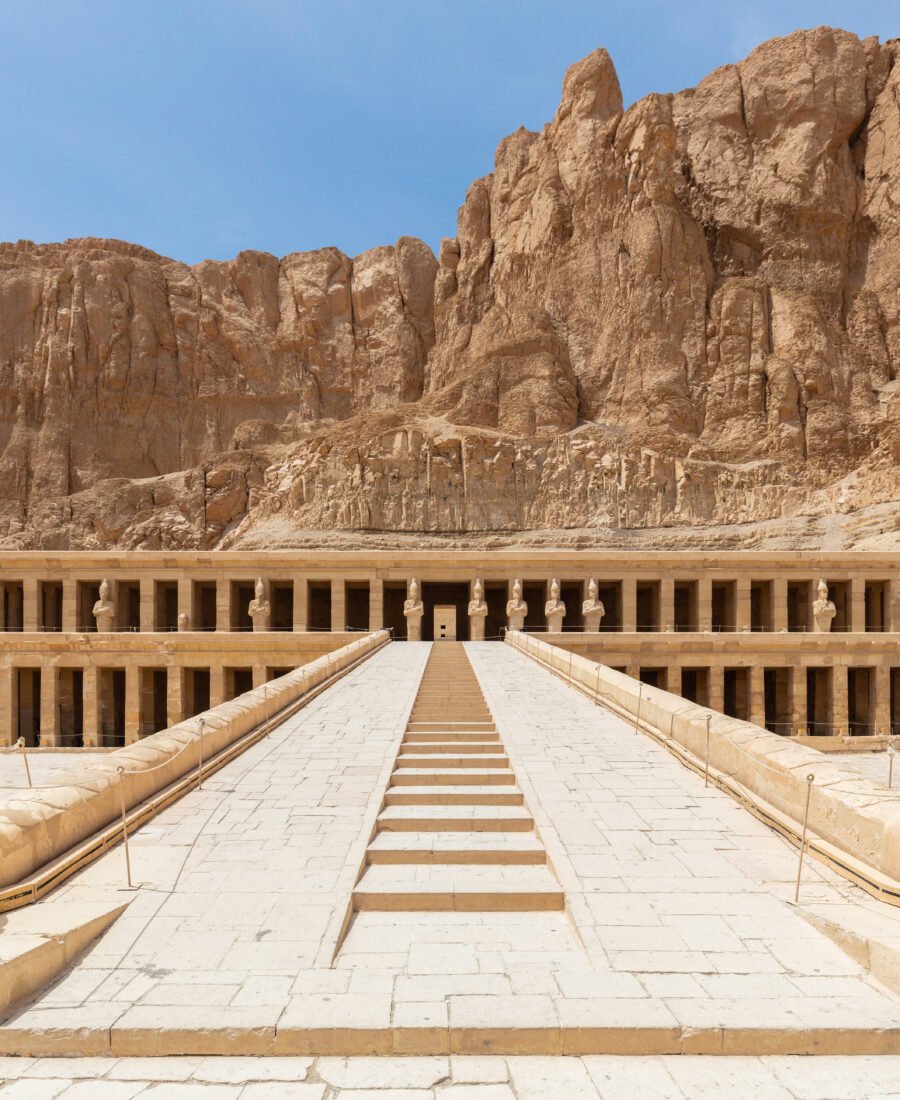
Royal West Bank
Enter the royal and funerary landscape of ancient Egypt.
Request current rateExplore →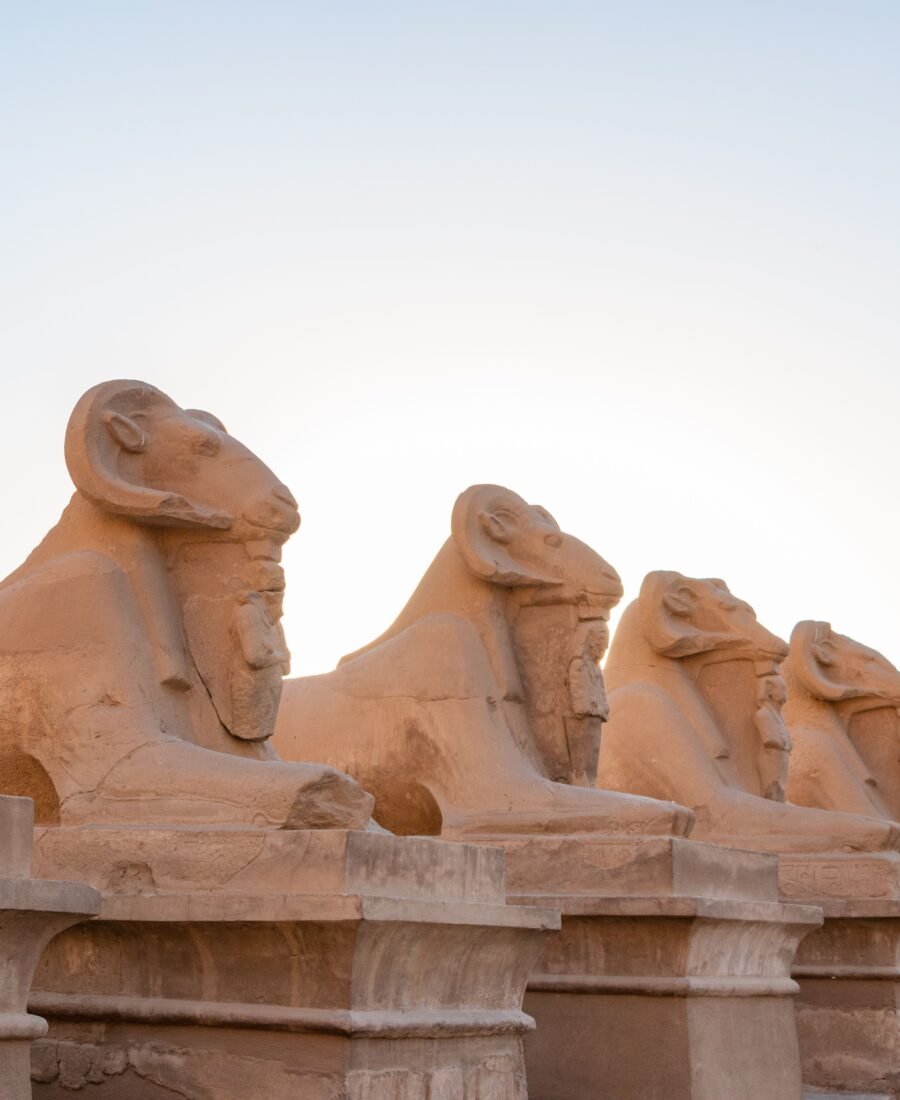
Thebes Essential
Walk through the ceremonial heart of ancient Egypt.
Request current rateExplore →This field guide is maintained against authoritative heritage and institutional references where available. Current operations are verified separately.
See Colossi of Memnon with context, not as another checklist stop
Tell us the places and historical themes that interest you. We will build the touring day around a coherent story and the conditions for your travel date.
Start Planning