
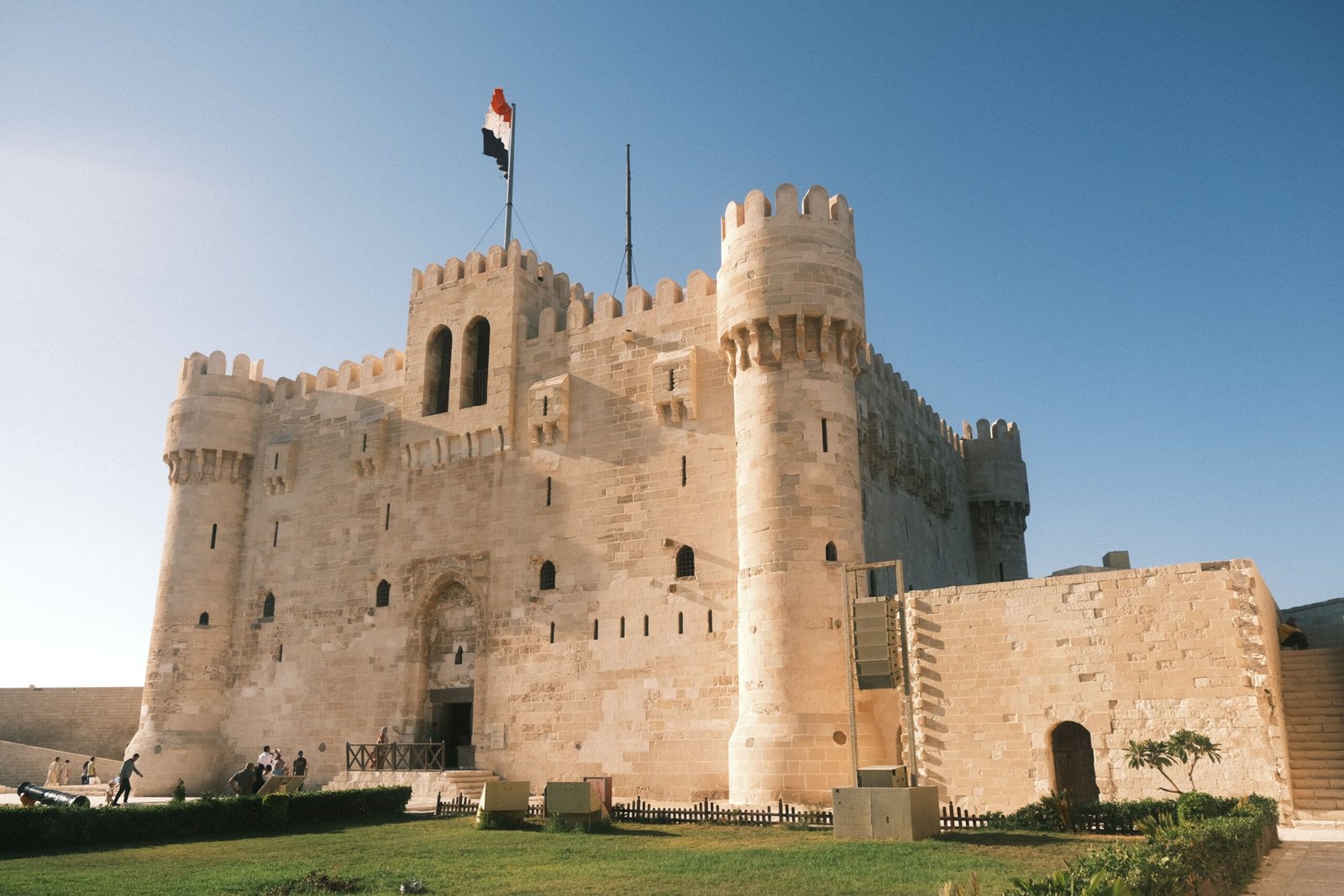
Citadel of Qaitbay
Qaitbay Citadel anchors Alexandria’s medieval history at the entrance to the Eastern Harbour, close to the traditional location of the ancient Pharos lighthouse.
Read the monument as part of a larger Egyptian story
The fortress shifts the city’s story away from the Hellenistic and Roman periods and into the strategic Mediterranean world of the Mamluks. Its position makes the harbour itself part of the historical explanation.
Historical context
The citadel was built in the fifteenth century under Sultan Qaitbay as part of coastal defence. It stands near the site traditionally associated with the ancient Lighthouse of Alexandria, though the medieval fortress is a distinct monument with its own history.
Details that help the site make sense
These are interpretive features to notice, not a promise of a fixed walking order or permanent access to every area.
Defensive position
The harbour entrance explains why this location remained strategically important.
Stone architecture
Fortification design reflects a very different function from Alexandria’s funerary and civic monuments.
Pharos memory
The site invites discussion of the ancient lighthouse while keeping archaeological certainty and later tradition separate.
The detail that changes how you see the place
The citadel is valuable because it prevents Alexandria from becoming a city frozen in classical antiquity. The same harbour remained important to later rulers for very different political reasons.
What an expert eye notices
Sea walls
Observe how the fortress meets the water and controls views across the harbour.
Defensive openings
Architecture here is designed for surveillance and defence, not ritual.
City skyline
The panorama helps connect modern Alexandria with its historic waterfront.
Questions travellers ask about Citadel of Qaitbay
Historical context stays stable; operating details are confirmed for your date because access and visitor rules can change.
Was the citadel built from the Lighthouse of Alexandria?
The fortress stands near the traditional Pharos location and reused stone has often been discussed, but the medieval monument should be understood on its own terms.
Who built Qaitbay Citadel?
It was constructed under the Mamluk Sultan Qaitbay in the fifteenth century.
Why include it in an ancient-history trip?
Because Alexandria’s importance continued long after antiquity, and the citadel makes that later Mediterranean history visible.
Tours and journeys that include Citadel of Qaitbay
The same canonical site guide can belong to several experiences. Each tour explains why the place matters to that particular story.

Alexandria Experience
Discover Egypt’s Mediterranean soul.
Request current rateExplore →This field guide is maintained against authoritative heritage and institutional references where available. Current operations are verified separately.
See Citadel of Qaitbay with context, not as another checklist stop
Tell us the places and historical themes that interest you. We will build the touring day around a coherent story and the conditions for your travel date.
Start Planning