
Anba Hadra Monastery
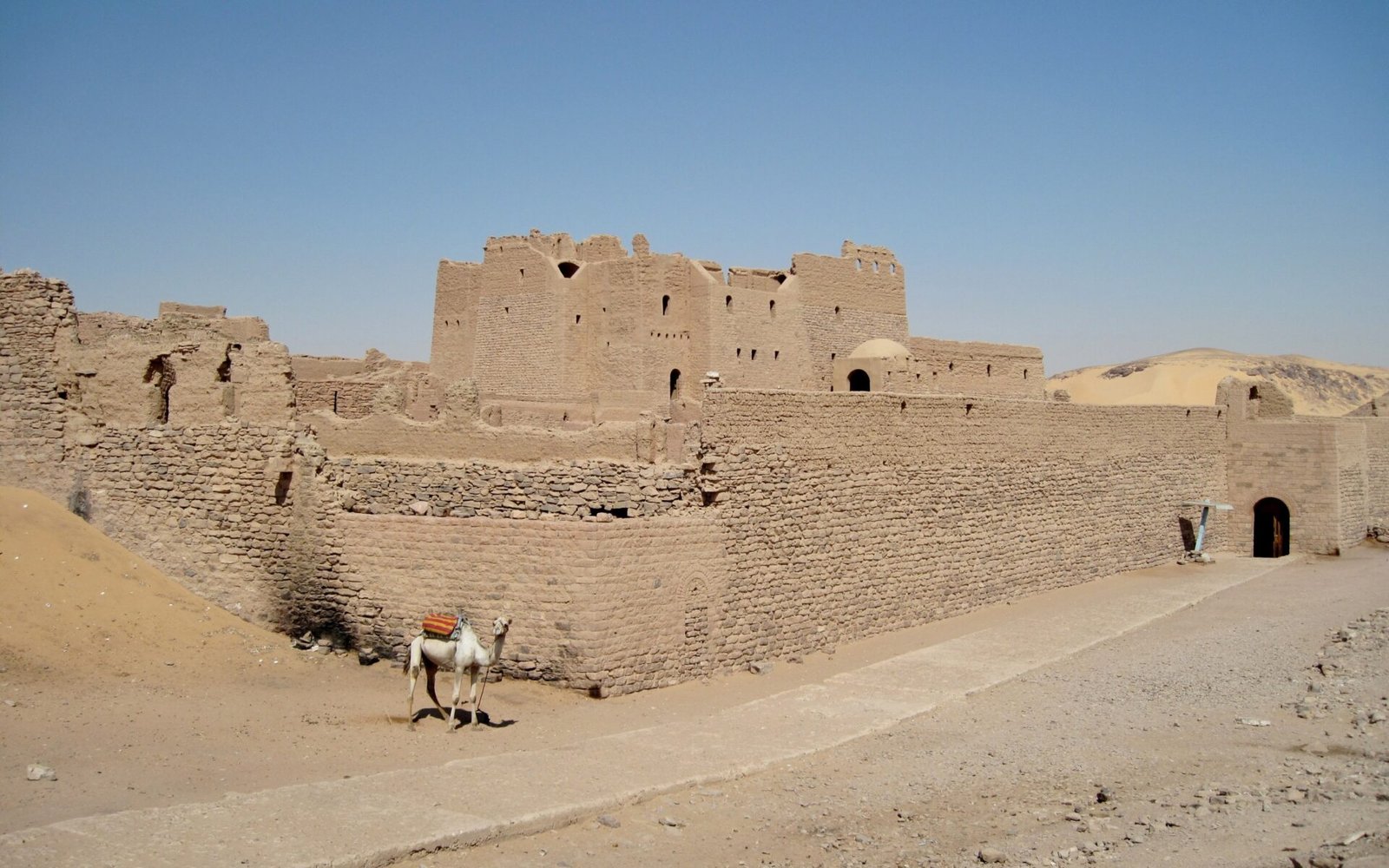
Anba Hadra, often called the Monastery of St Simeon, preserves one of Aswan’s most important early Christian monastic landscapes between the Nile and western desert.
Read the monument as part of a larger Egyptian story
The monastery combines religious history with desert geography. Fortified walls, church remains and communal spaces help explain how monastic communities organised worship, work and daily life in a challenging environment.
Historical context
The ruins are part of the UNESCO-listed Nubian monuments zone at Aswan. The complex developed as a substantial Christian monastery and preserves architecture that reflects both communal religious life and the practical demands of the desert frontier.
Details that help the site make sense
These are interpretive features to notice, not a promise of a fixed walking order or permanent access to every area.
Church and communal spaces
Religious life depended on shared architecture, not isolated hermit cells alone.
Fortified enclosure
Walls helped define and protect the community.
Desert setting
The physical journey away from the city is part of understanding monastic isolation and discipline.
The detail that changes how you see the place
The monastery is most effective when the landscape is allowed to speak. Distance from the cultivated river edge helps explain why desert withdrawal became such a powerful part of Christian monastic tradition.
What an expert eye notices
Mudbrick and stone
Construction materials respond to local environment and available resources.
Views back to the Nile
The contrast between river life and desert withdrawal is immediate.
Communal organisation
Look for evidence of storage, living and shared work alongside sacred rooms.
Questions travellers ask about Anba Hadra Monastery
Historical context stays stable; operating details are confirmed for your date because access and visitor rules can change.
Is this the Monastery of St Simeon?
Yes, Anba Hadra is commonly known to visitors as the Monastery of St Simeon.
Is it an active monastery?
No. It is an archaeological monastic complex.
How is it reached?
The West Bank/desert approach requires locally confirmed transport and walking arrangements.
Tours and journeys that include Anba Hadra Monastery
The same canonical site guide can belong to several experiences. Each tour explains why the place matters to that particular story.
Across the Desert to Anba Hadra Monastery
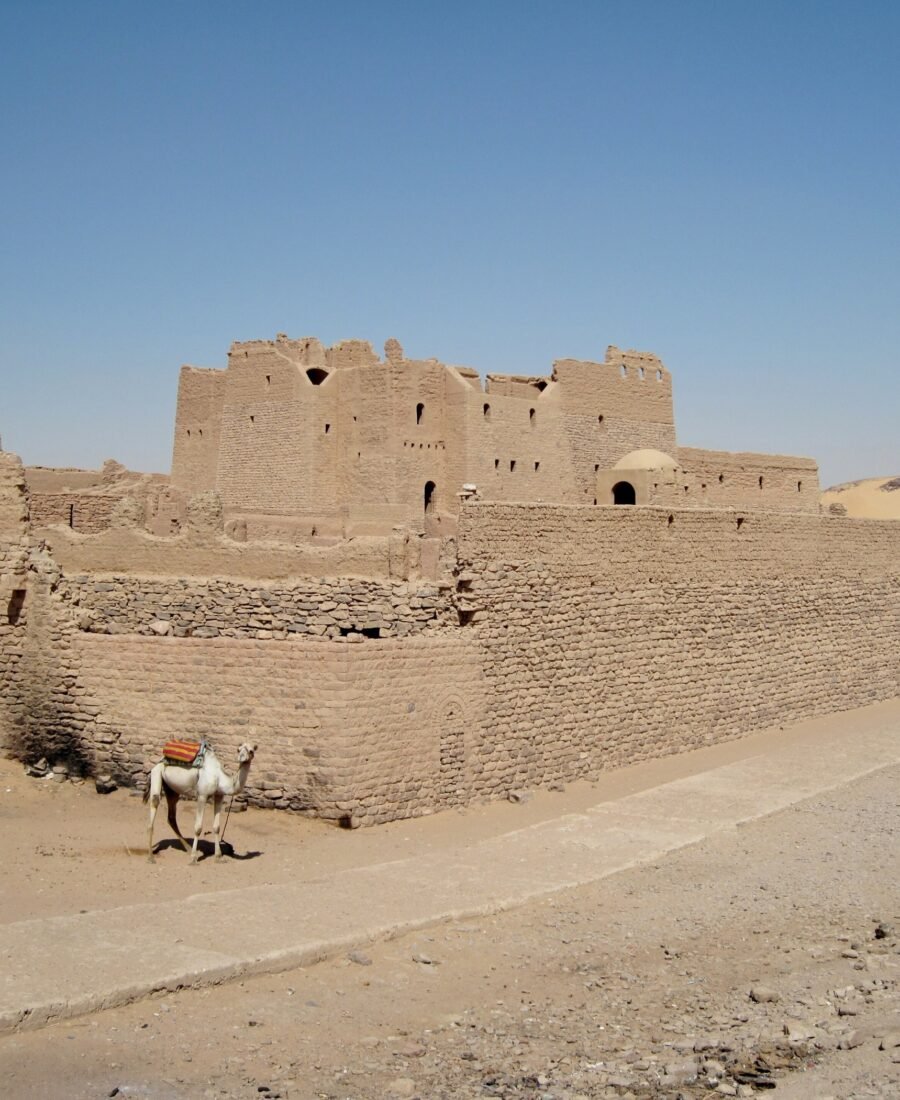
Cross into Aswan’s western desert landscape to explore the monastery of Anba Hadra.
Request current rateExplore →This field guide is maintained against authoritative heritage and institutional references where available. Current operations are verified separately.
See Anba Hadra Monastery with context, not as another checklist stop
Tell us the places and historical themes that interest you. We will build the touring day around a coherent story and the conditions for your travel date.
Start Planning