
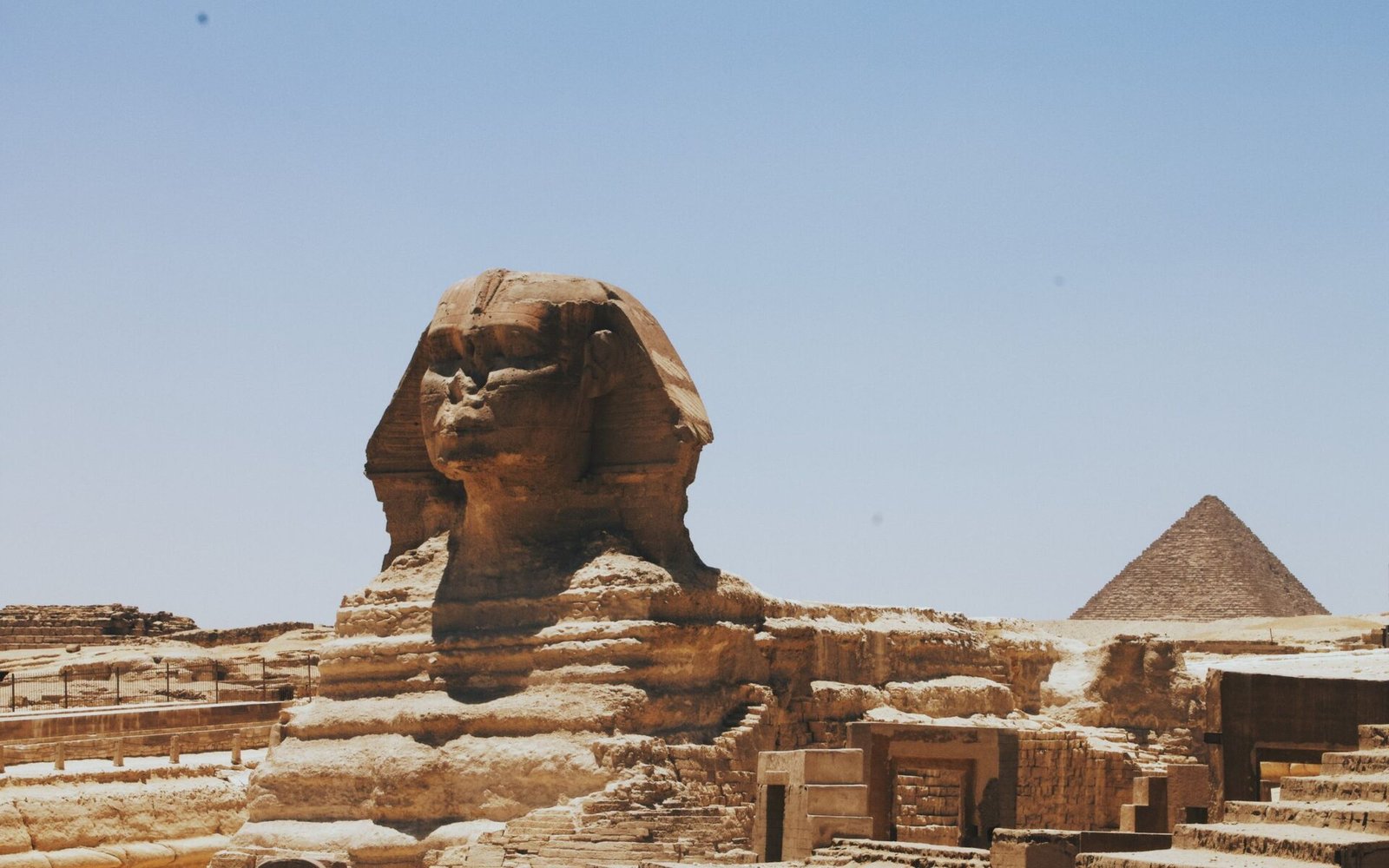
Great Sphinx of Giza
Read the Great Sphinx as part of the Giza royal landscape, where colossal image, quarry, temple architecture and kingship meet.
Read the monument as part of a larger Egyptian story
The Sphinx is frequently treated as a stand-alone icon, but its meaning becomes clearer when it is viewed beside the pyramid complexes and nearby temple architecture. Its body is cut from the natural limestone bedrock, making the monument physically part of the plateau itself.
Historical context
The Great Sphinx is generally associated with the Fourth Dynasty and the reign of Khafre. Its precise ancient name and some aspects of its interpretation remain debated, so a careful visit separates what archaeology strongly supports from what later traditions and modern speculation add.
Details that help the site make sense
These are interpretive features to notice, not a promise of a fixed walking order or permanent access to every area.
Colossal royal image
Consider why royal power was expressed through a lion-bodied human-headed monument at this scale.
Temple relationship
The nearby temple structures help anchor the Sphinx in the architectural programme of Giza.
Geology and carving
The monument’s bedrock body makes the natural plateau part of the sculpture.
The detail that changes how you see the place
The most useful way to approach the Sphinx is to resist the temptation to begin with mysteries. Start with geology, royal landscape, architecture and evidence; the unanswered questions are more interesting after the secure context is understood.
What an expert eye notices
Bedrock body
Notice where natural rock and added masonry meet.
View toward Khafre
Look at how the Sphinx sits in relation to Khafre’s complex.
Scale shift
Compare close-range carving with the monument’s silhouette from farther away.
Questions travellers ask about Great Sphinx of Giza
Historical context stays stable; operating details are confirmed for your date because access and visitor rules can change.
Who built the Sphinx?
The monument is generally associated with Khafre’s Fourth Dynasty complex, although details of attribution continue to be discussed.
Are the “mysteries of the Sphinx” proven?
Many popular claims go beyond the archaeological evidence. A responsible guide distinguishes established evidence from speculation.
Can I go right up to the Sphinx?
Visitor routes and access conditions can change and are confirmed for the date of travel.
Tours and journeys that include Great Sphinx of Giza
The same canonical site guide can belong to several experiences. Each tour explains why the place matters to that particular story.
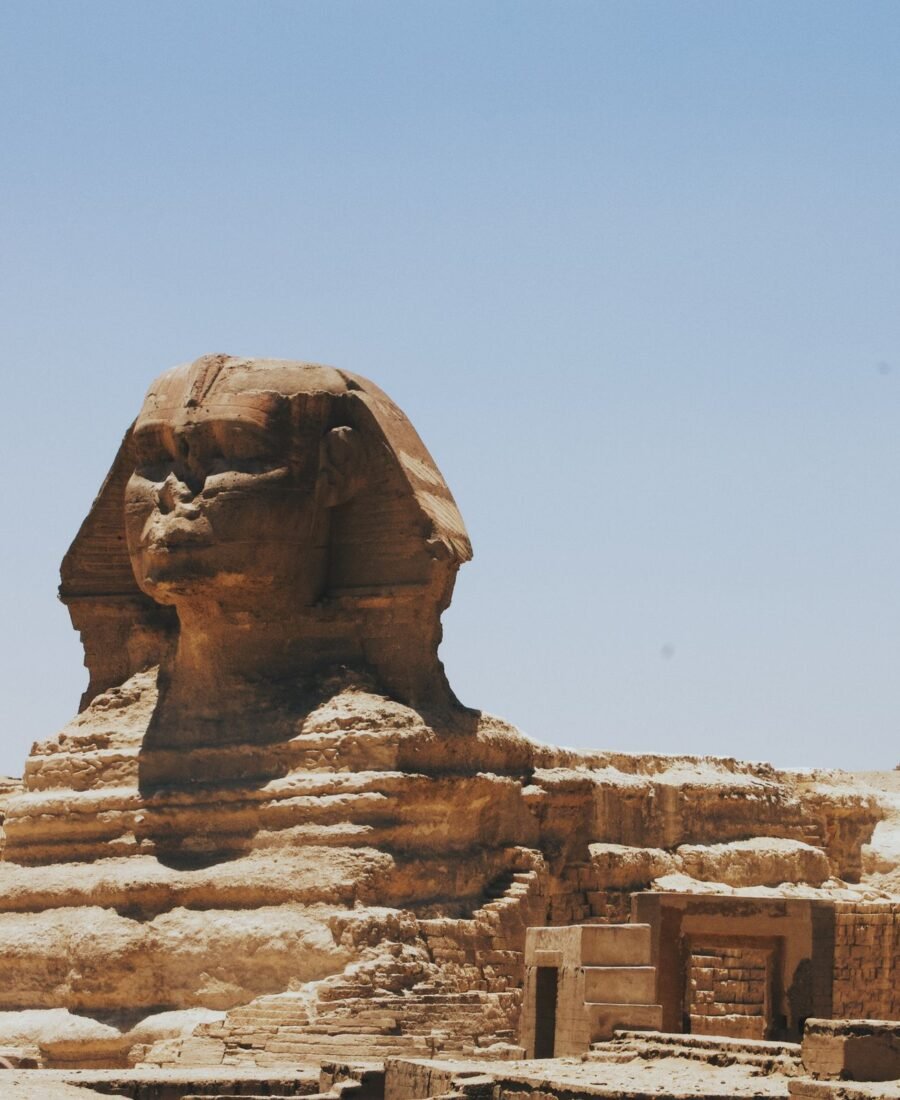
Cairo First Encounter
The essential introduction to Egypt’s greatest icons.
Request current rateExplore →This field guide is maintained against authoritative heritage and institutional references where available. Current operations are verified separately.
See Great Sphinx of Giza with context, not as another checklist stop
Tell us the places and historical themes that interest you. We will build the touring day around a coherent story and the conditions for your travel date.
Start Planning