
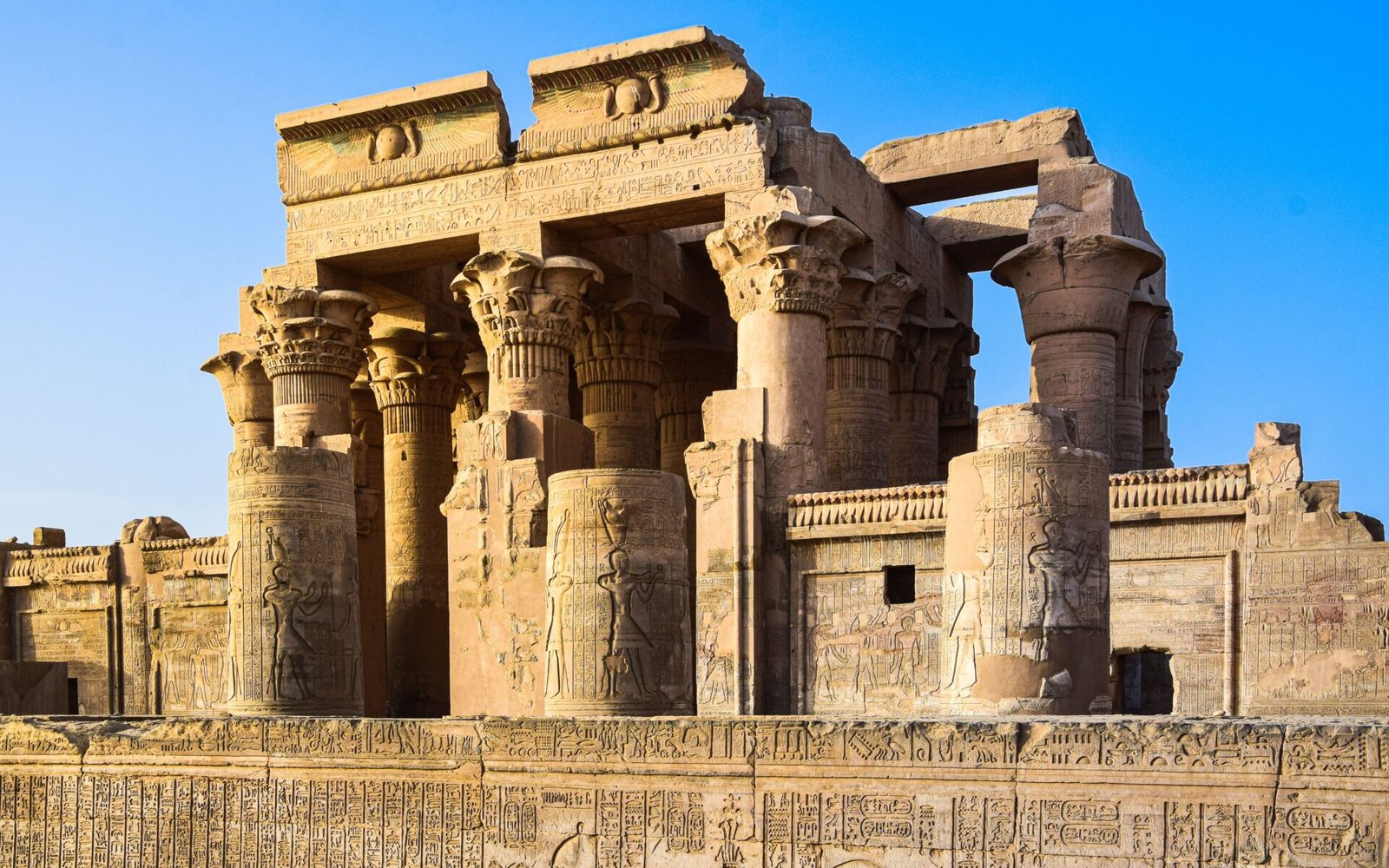
Temple of Kom Ombo
Kom Ombo’s riverside temple is unusual for its paired architectural arrangement and cults associated with Sobek and Haroeris.
Read the monument as part of a larger Egyptian story
The temple becomes more interesting when the “double temple” idea is followed through architecture rather than reduced to crocodile stories. Mirrored rooms, paired doorways and repeated ritual spaces reflect the presence of two principal divine cults.
Historical context
Much of the standing temple dates to the Ptolemaic and Roman periods. Its position above a bend in the Nile adds a powerful landscape setting, while nearby crocodile material illustrates the cult of Sobek and the region’s sacred fauna.
Details that help the site make sense
These are interpretive features to notice, not a promise of a fixed walking order or permanent access to every area.
Double plan
Paired architectural elements help explain the temple’s dual dedication.
Ritual reliefs
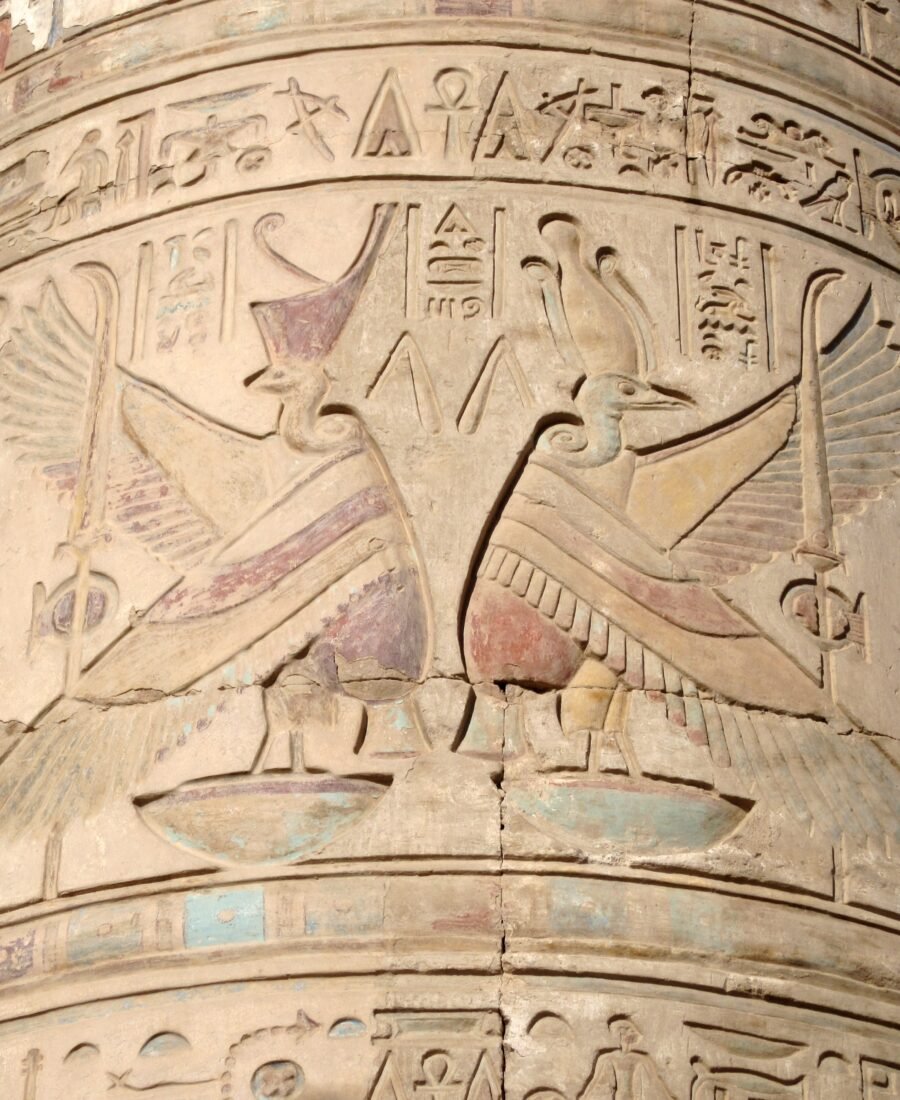
Scenes show kings presenting offerings within traditional Egyptian temple language.
Nile setting
The elevated terrace makes the river part of the monument’s visual identity.
The detail that changes how you see the place
Kom Ombo is a good place to explain that Egyptian religion was local as well as national. Sobek’s importance here reflects regional sacred geography, while Haroeris belongs to a different divine tradition within the same complex.
What an expert eye notices
Paired doorways
Look for architectural doubling rather than searching only for crocodile images.
Late-period style
Ptolemaic and Roman rulers continue pharaonic forms and ritual scenes.
Water and horizon
The temple’s placement above the Nile is visually and historically important.
Questions travellers ask about Temple of Kom Ombo
Historical context stays stable; operating details are confirmed for your date because access and visitor rules can change.
Why is Kom Ombo called a double temple?
Because its plan and cult arrangement serve two principal divine traditions in a paired architectural composition.
Who was Sobek?
A crocodile-associated god with strong regional importance and wider connections to power, fertility and the Nile.
Is the Crocodile Museum separate?
It is adjacent to the temple area; ticketing and opening arrangements should be checked for the visit date.
Tours and journeys that include Temple of Kom Ombo
The same canonical site guide can belong to several experiences. Each tour explains why the place matters to that particular story.
Aswan to Luxor via Kom Ombo & Edfu
Turn the transfer north into a meaningful archaeological journey.
Request current rateExplore →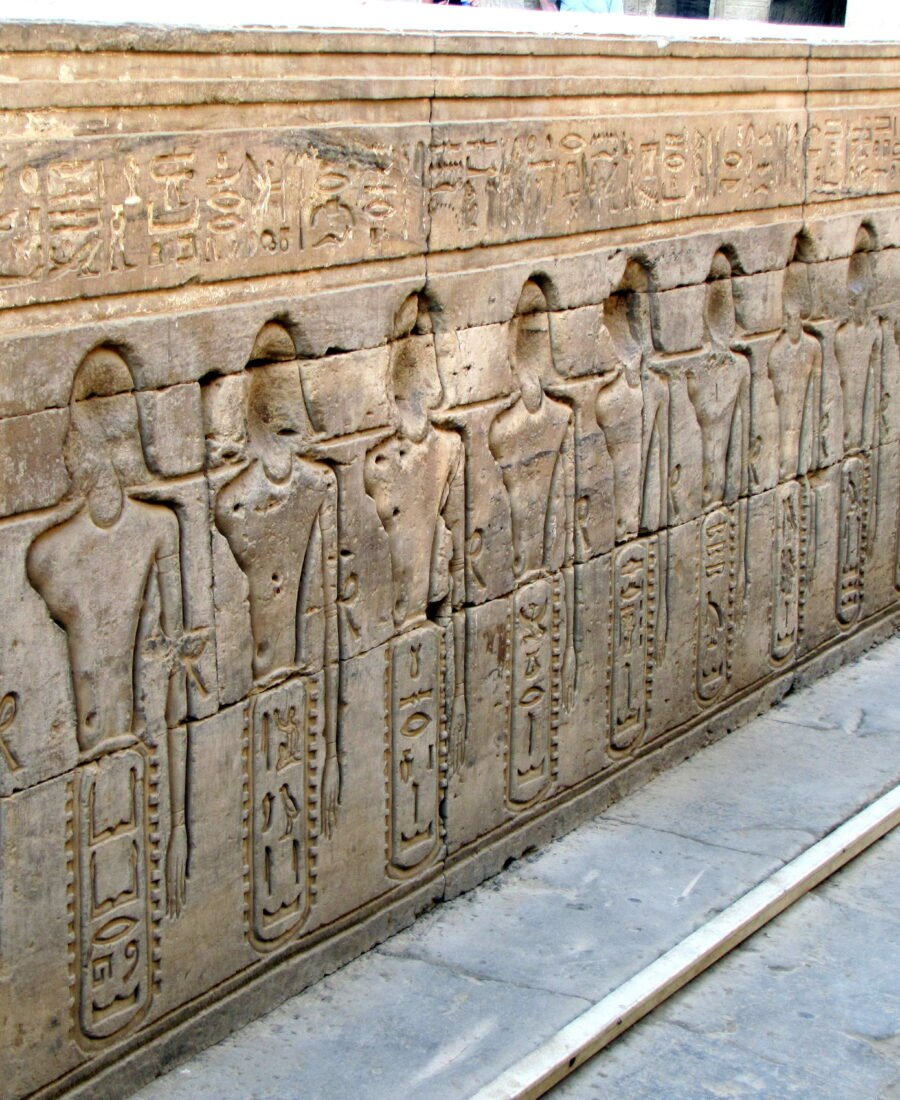
Daraw & Kom Ombo: Trade, Temples and the Living Nile
Connect river trade, local life and temple history beyond central Aswan.
Request current rateExplore →This field guide is maintained against authoritative heritage and institutional references where available. Current operations are verified separately.
See Temple of Kom Ombo with context, not as another checklist stop
Tell us the places and historical themes that interest you. We will build the touring day around a coherent story and the conditions for your travel date.
Start Planning