
Abu Simbel Temples
Abu Simbel combines Ramesses II’s monumental royal programme with one of the twentieth century’s most extraordinary international heritage-rescue projects.
Read the monument as part of a larger Egyptian story
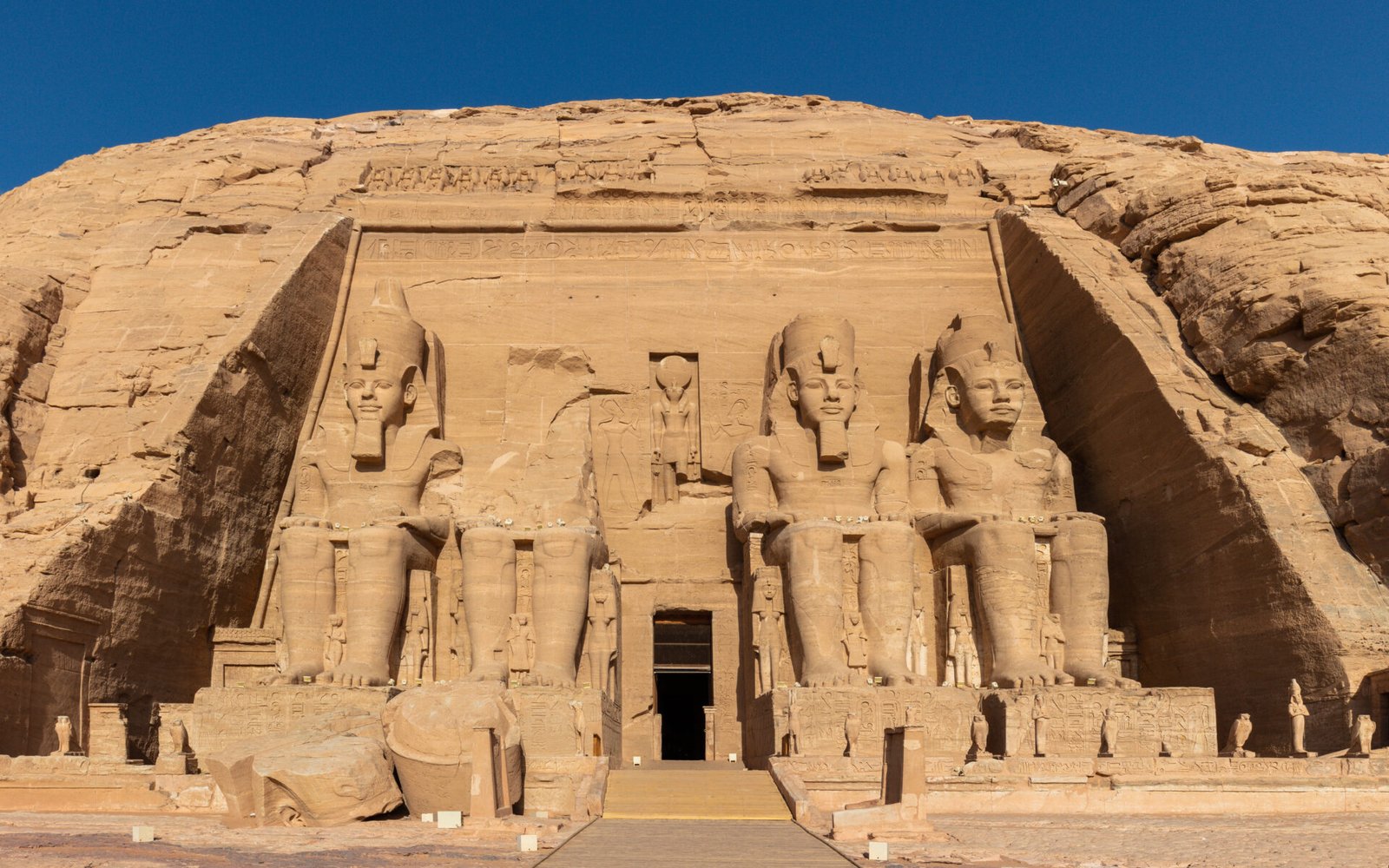
The site contains the Great Temple of Ramesses II and the smaller temple dedicated to Hathor and Nefertari. Their rock-cut façades, interior reliefs and southern location make kingship, Nubia, diplomacy, warfare and divine identity central themes.
Historical context
The temples were carved in the thirteenth century BCE and relocated in the 1960s during the UNESCO campaign to save Nubian monuments from the rising waters created by the Aswan High Dam. The modern rescue story is now inseparable from the ancient monument.
See the place before you arrive
Details that help the site make sense
These are interpretive features to notice, not a promise of a fixed walking order or permanent access to every area.
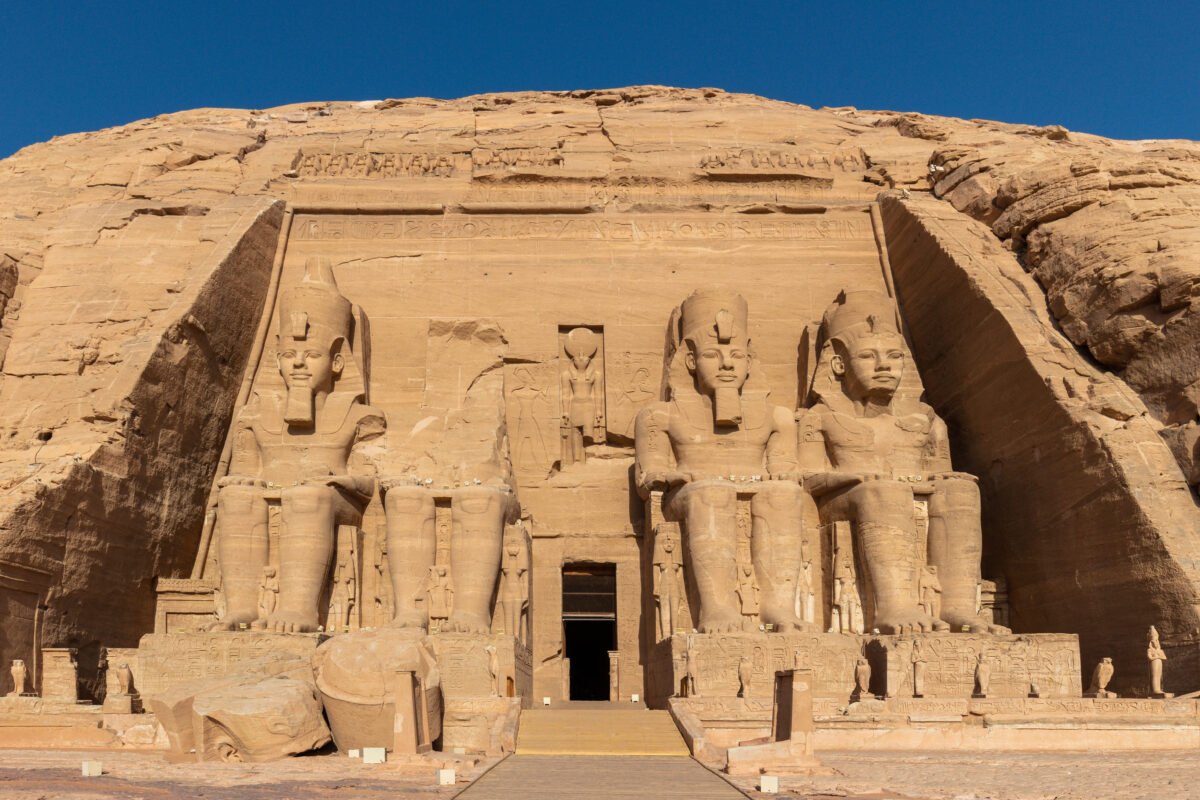
Great Temple façade
Four colossal seated figures turn the cliff face into a declaration of royal presence.
Interior axis
Successive halls lead toward the sanctuary, where solar illumination became part of the temple’s fame.
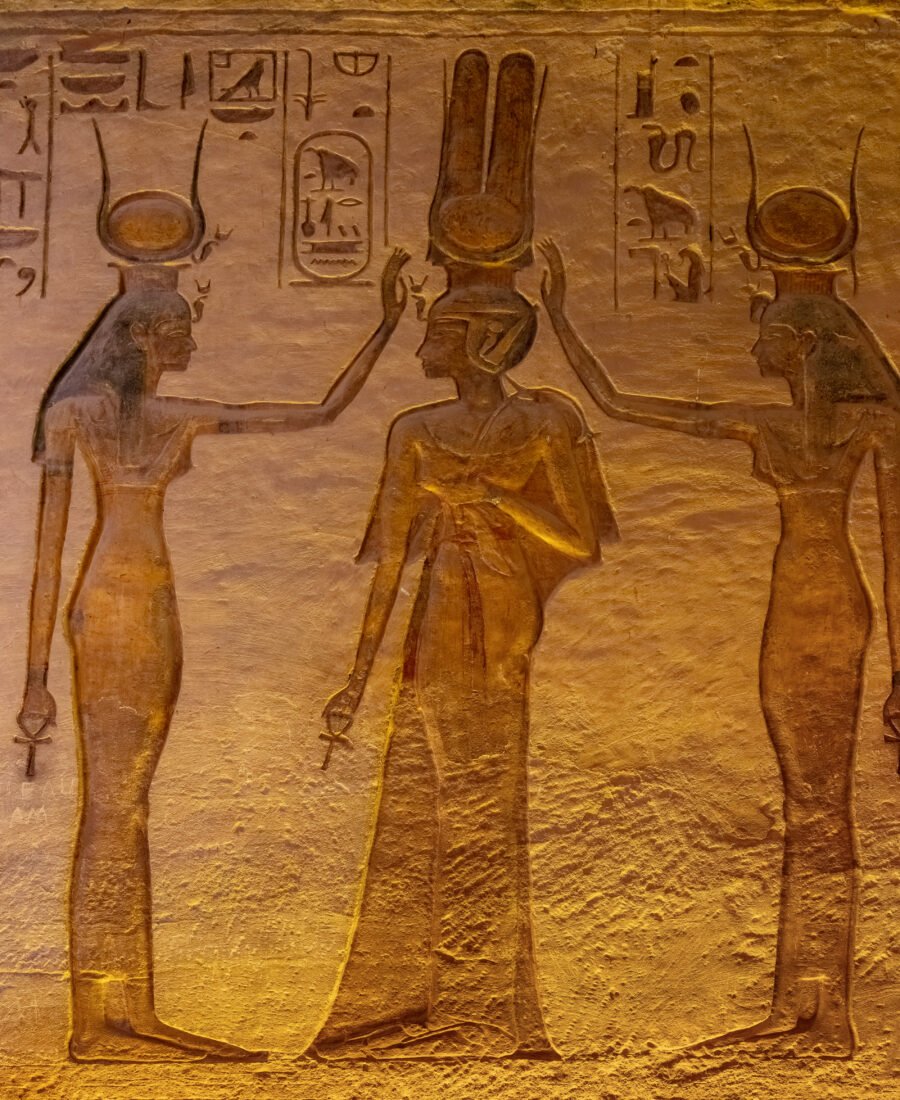
Nefertari’s temple
The Hathoric temple gives Queen Nefertari an unusually prominent monumental role.
The detail that changes how you see the place
Abu Simbel should be interpreted twice: first as a New Kingdom royal monument in Nubia, then as a global story about archaeology, engineering and heritage preservation.
What an expert eye notices
Battle imagery
Read military scenes as royal ideology rather than neutral reportage.
Scale transition
The colossal façade gives way to increasingly restricted interior spaces.
Modern setting
Ask how the relocation recreated orientation and landscape while preserving the monument.
Questions travellers ask about Abu Simbel Temples
Historical context stays stable; operating details are confirmed for your date because access and visitor rules can change.
Who built Abu Simbel?
The temples were created under Ramesses II in the Nineteenth Dynasty.
Were the temples moved?
Yes. They were relocated to higher ground during the international Nubian rescue campaign in the 1960s.
What about the famous sun alignment?
Solar illumination of the inner sanctuary is real, though popular descriptions of exact dates and ancient intent should be handled carefully and checked against current scholarship.
Tours and journeys that include Abu Simbel Temples
The same canonical site guide can belong to several experiences. Each tour explains why the place matters to that particular story.
Abu Simbel by Air: The Temples in a Day
Reach Abu Simbel by air when flight schedules and availability make it the right fit.
Request current rateExplore →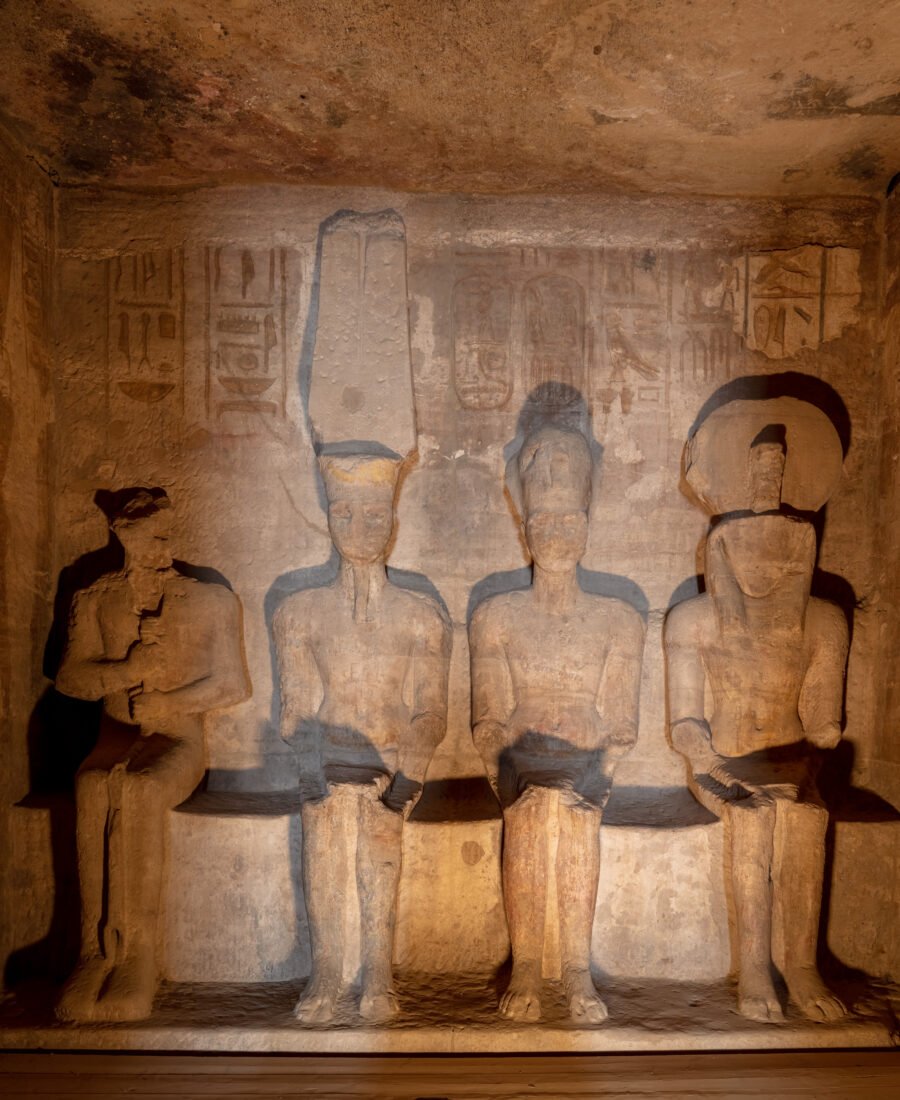
Abu Simbel by Private Road Journey
Travel south to one of Egypt’s most extraordinary monumental landscapes.
Request current rateExplore →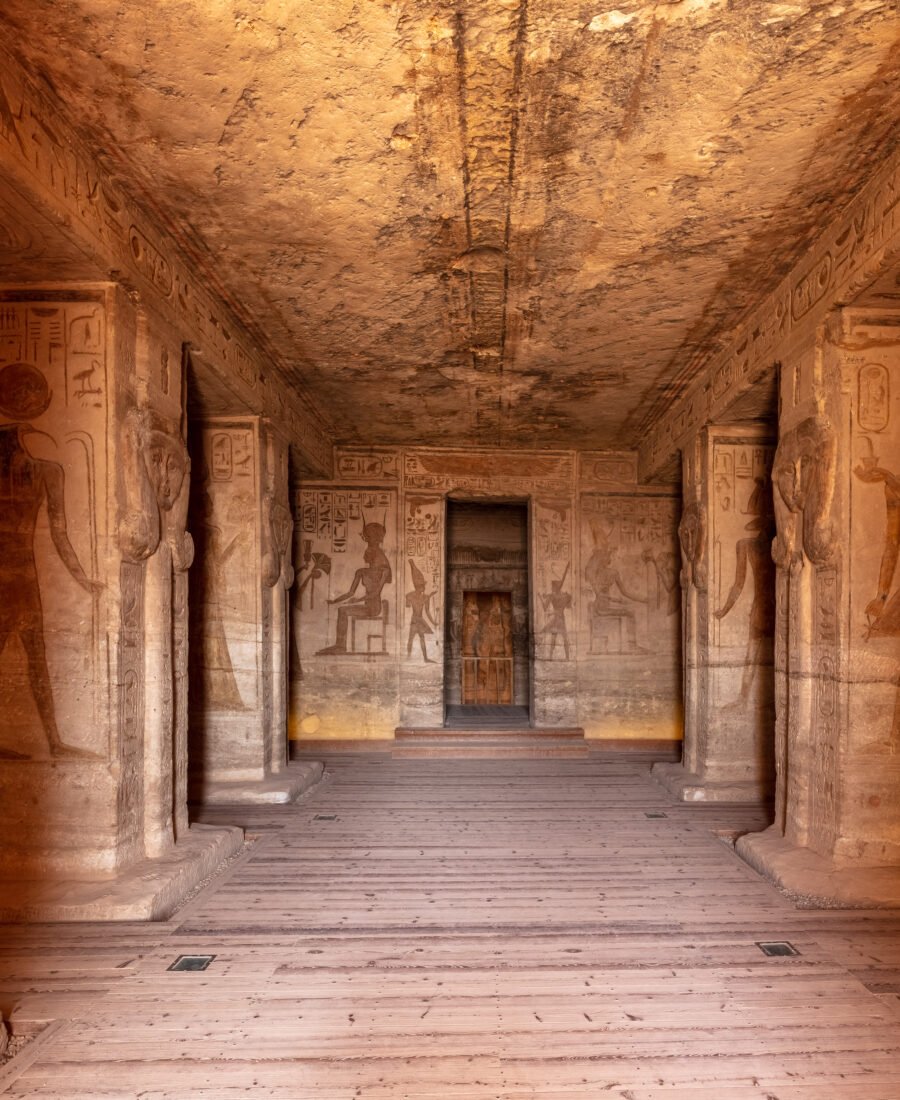
Abu Simbel Overnight
Give Abu Simbel more time and a slower rhythm with an overnight stay.
Request current rateExplore →This field guide is maintained against authoritative heritage and institutional references where available. Current operations are verified separately.
See Abu Simbel Temples with context, not as another checklist stop
Tell us the places and historical themes that interest you. We will build the touring day around a coherent story and the conditions for your travel date.
Start Planning