
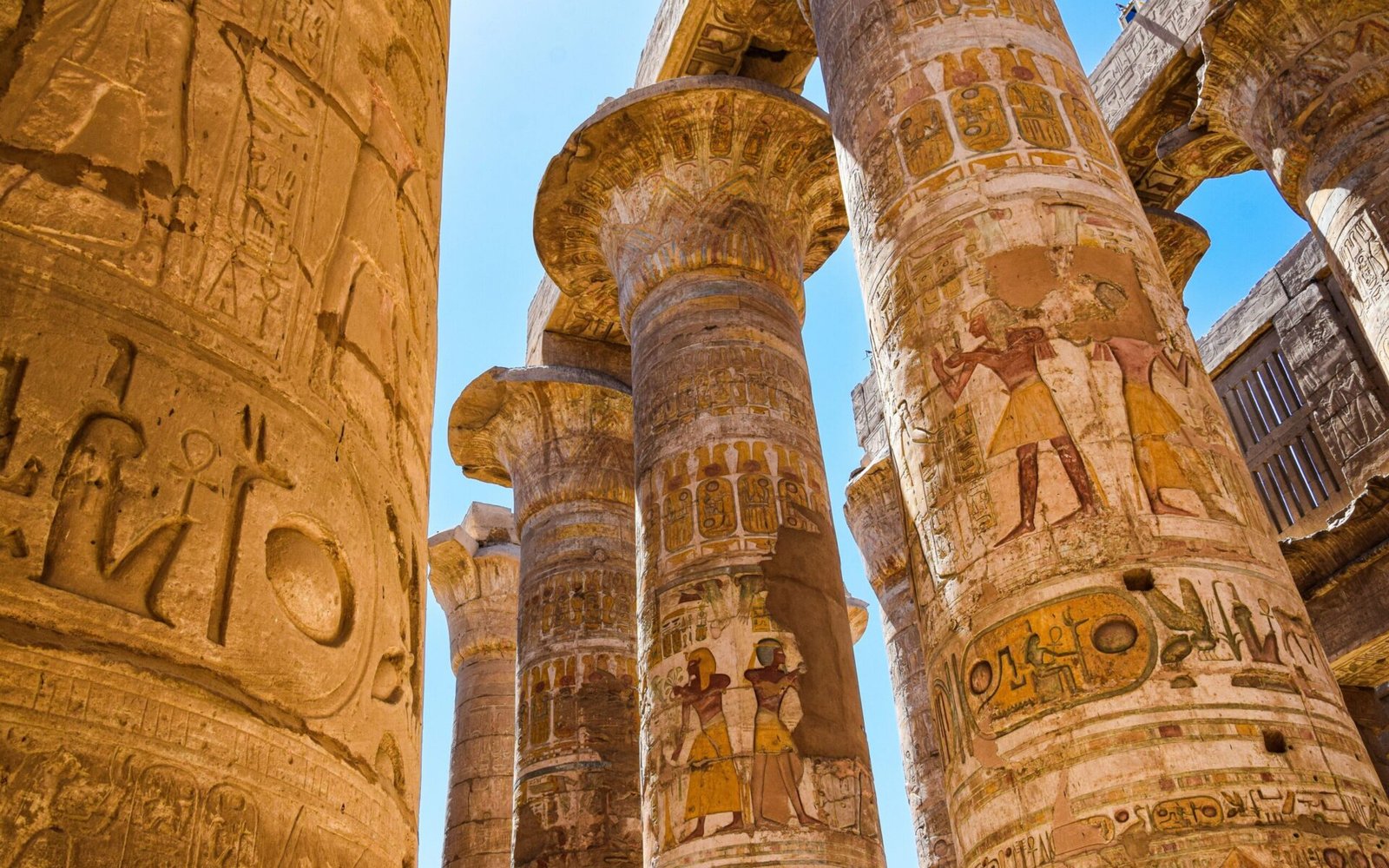
Medinet Habu
Medinet Habu preserves the monumental memorial temple of Ramesses III within a broader sacred and administrative complex on the Theban West Bank.
Read the monument as part of a larger Egyptian story
The temple is one of the best places to discuss how royal memorial cult, warfare imagery, ritual, administration and the West Bank landscape came together. Its preservation allows architecture and relief to be read in sequence without reducing the site to battle scenes alone.
Historical context
The principal surviving temple was built for Ramesses III of the Twentieth Dynasty, although the area contains earlier religious history as well. Massive enclosure walls, pylons, courts and decorated halls made the complex a major institution in western Thebes.
Details that help the site make sense
These are interpretive features to notice, not a promise of a fixed walking order or permanent access to every area.
First pylon and war reliefs
Military imagery presents royal power and should be read critically as royal representation.
Courts and ritual axis
Movement inward changes from monumental public imagery toward more restricted sacred space.
Administrative context
The complex functioned as more than a temple façade; institutions and communities depended on it.
The detail that changes how you see the place
Medinet Habu is ideal for explaining that royal temples were economic and institutional centres as well as sacred monuments. The walls tell a political story, but the site’s daily functioning is equally important.
What an expert eye notices
Colour traces
Some ceilings and reliefs retain enough pigment to reconstruct a much brighter ancient surface.
Captured-enemy imagery
Treat these scenes as ideological royal language, not neutral documentary photography.
Doorways and scale
Successive thresholds control movement and hierarchy through the temple.
Questions travellers ask about Medinet Habu
Historical context stays stable; operating details are confirmed for your date because access and visitor rules can change.
Who built Medinet Habu?
The major memorial temple was built for Ramesses III, with earlier sacred activity also present in the area.
Is Medinet Habu a mortuary temple?
It is commonly described as the memorial or mortuary temple of Ramesses III and formed part of his royal cult complex.
Why is it important in Hidden West Bank?
It introduces the institutional and royal world surrounding the communities and private tombs explored elsewhere on the West Bank.
Tours and journeys that include Medinet Habu
The same canonical site guide can belong to several experiences. Each tour explains why the place matters to that particular story.
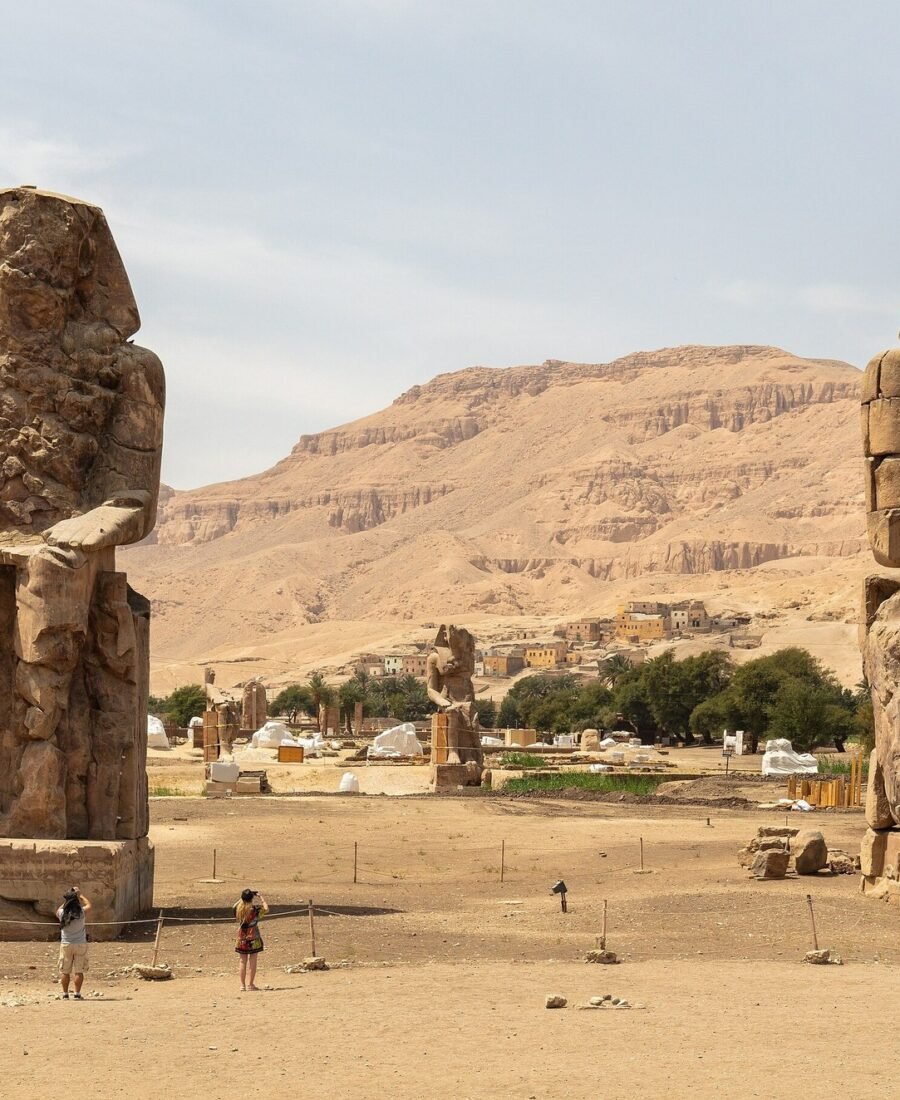
Hidden West Bank
Step beyond the best-known monuments into the quieter archaeological landscape of western Thebes.
Request current rateExplore →This field guide is maintained against authoritative heritage and institutional references where available. Current operations are verified separately.
See Medinet Habu with context, not as another checklist stop
Tell us the places and historical themes that interest you. We will build the touring day around a coherent story and the conditions for your travel date.
Start Planning